Project
NASA JPL Autonomy Testbed Paper
When engineers and designers harmonize.
About
This research paper investigates the potential likelihood of "common core" elements existing across autonomy testbeds and to see if it's possible to standardize the design approach without sacrificing performance or efficacy.
Awards
NASA JPL Team Award (Mobility & Robotics Section)
Impact
By implementing a Human Centered R&D approach alongside the Engineering research, these findings provide actionable guidelines for what concepts to research further in order to explore the plausibility of this design approach.
Company
NASA Jet Propulsion Laboratory, California Institute of Technology
Timeframe
August 2020 - September 2020
Tools
Video conferencing tool, Slack, Google Suite, MURAL
Team
John Day, R. Davis Born, Ashish Goel, Emma Kalayjian,
So Young Kim-Castet, Hari Nayar, Cristina Sorice, Kristopher Wehage
Problem
No two testbeds are the same.
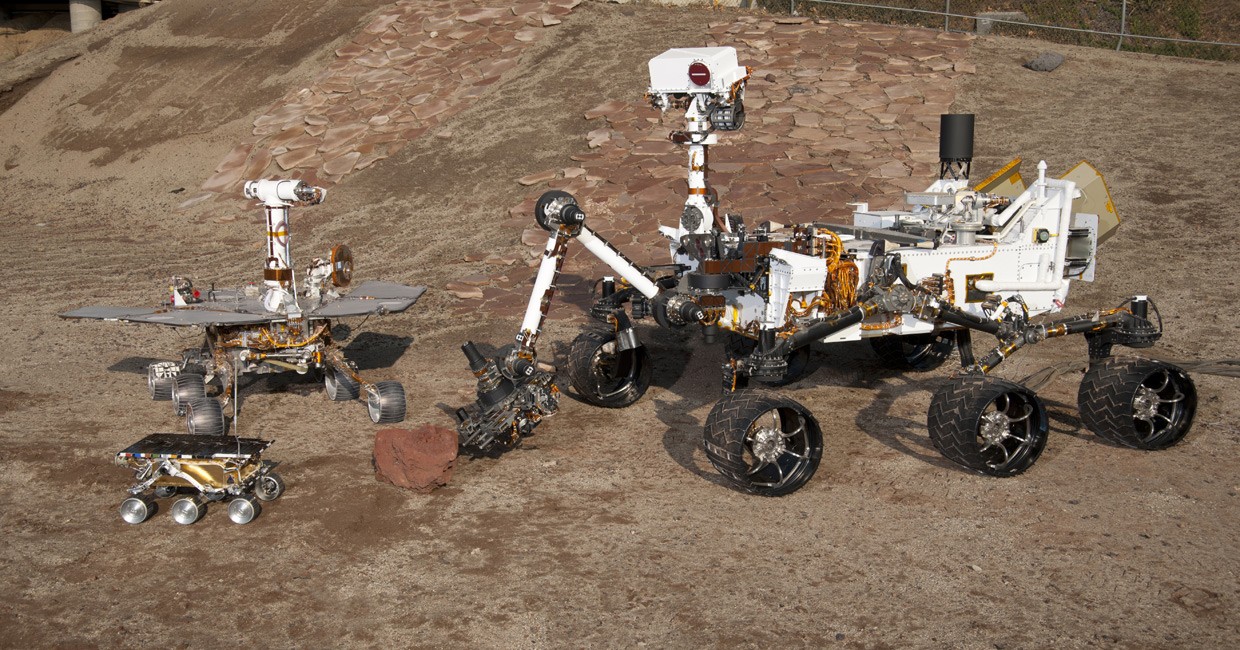
Every single flight project is truly one of a kind, complete with their own specialized requirements. When a flight project is constructed, usually the autonomy testbeds will also follow suit and be equally custom built to fully satisfy each specialized requirement of that project.
This design approach leads to costly and time consuming development efforts that are completely effective for the project at hand, but questionable for anything else.
Questions
What components, if any, do all autonomy testbeds share?
If there are any core components discovered, is there a way to standardize them so that development costs and schedules may be reduced with no impact to efficacy?
My Contributions
Persona Development, Interview Question Formulation, User/Stakeholder Interviews, Survey Formulation, Workshop Hosting, Data Synthesis, Scheduling + Logistics, Documentation, Paper Writing
Skillset
Autonomy Research, UX Research, Collaboration with Engineering
Process
Planning (Week 1)
Kick-off meeting
Project timeline finalization
Review and expansion of stakeholder list
Finalization of data collection methods
Finalization of interview structure
Generate interview template
Collecting Input (weeks 2+3)
Pre-interview web-based survey
Virtual stakeholder & user interviews
Unmoderated questionnaire
Organizing Data (Weeks 4+5)
Analyze & synthesize survey and interview results
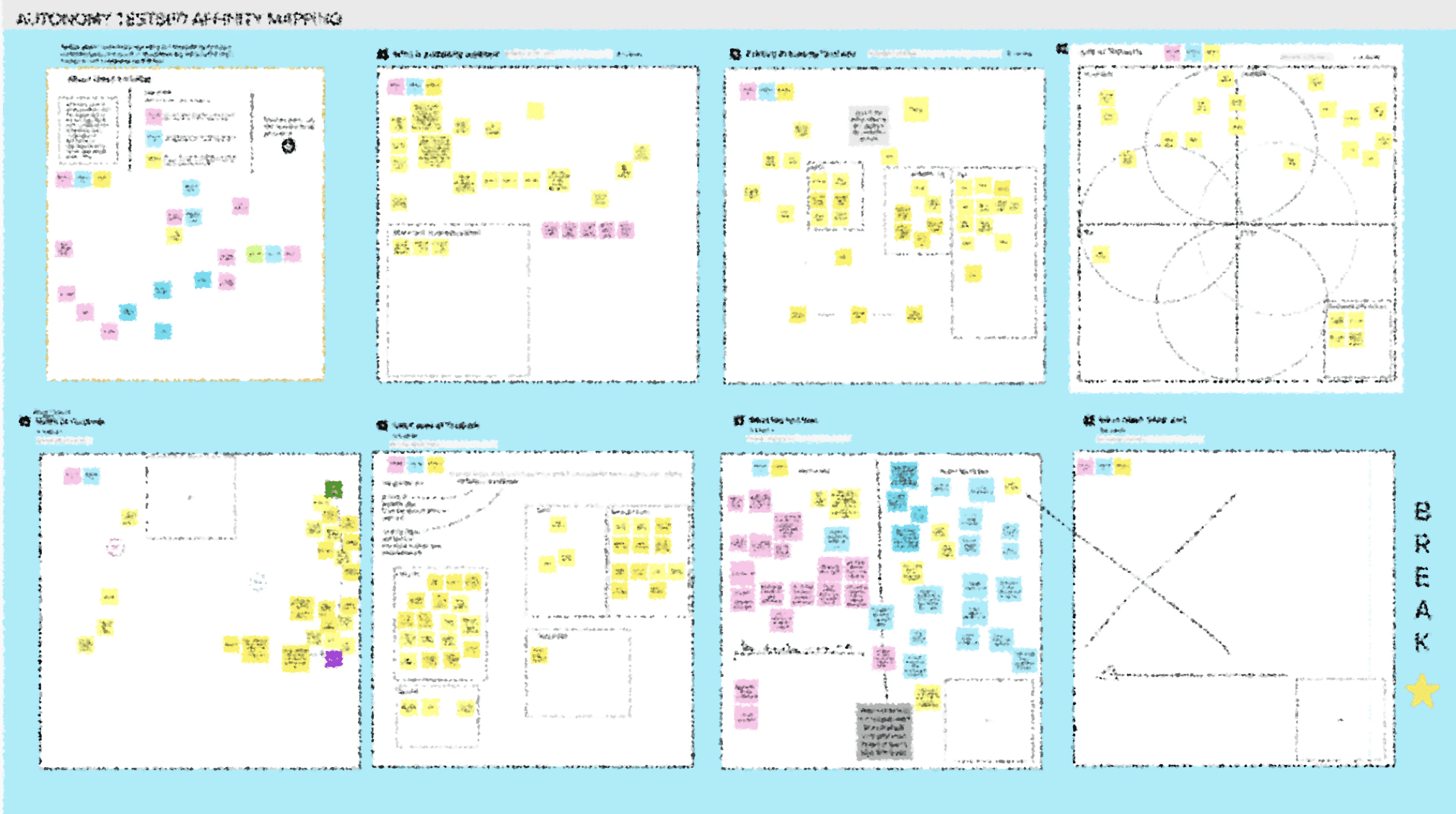
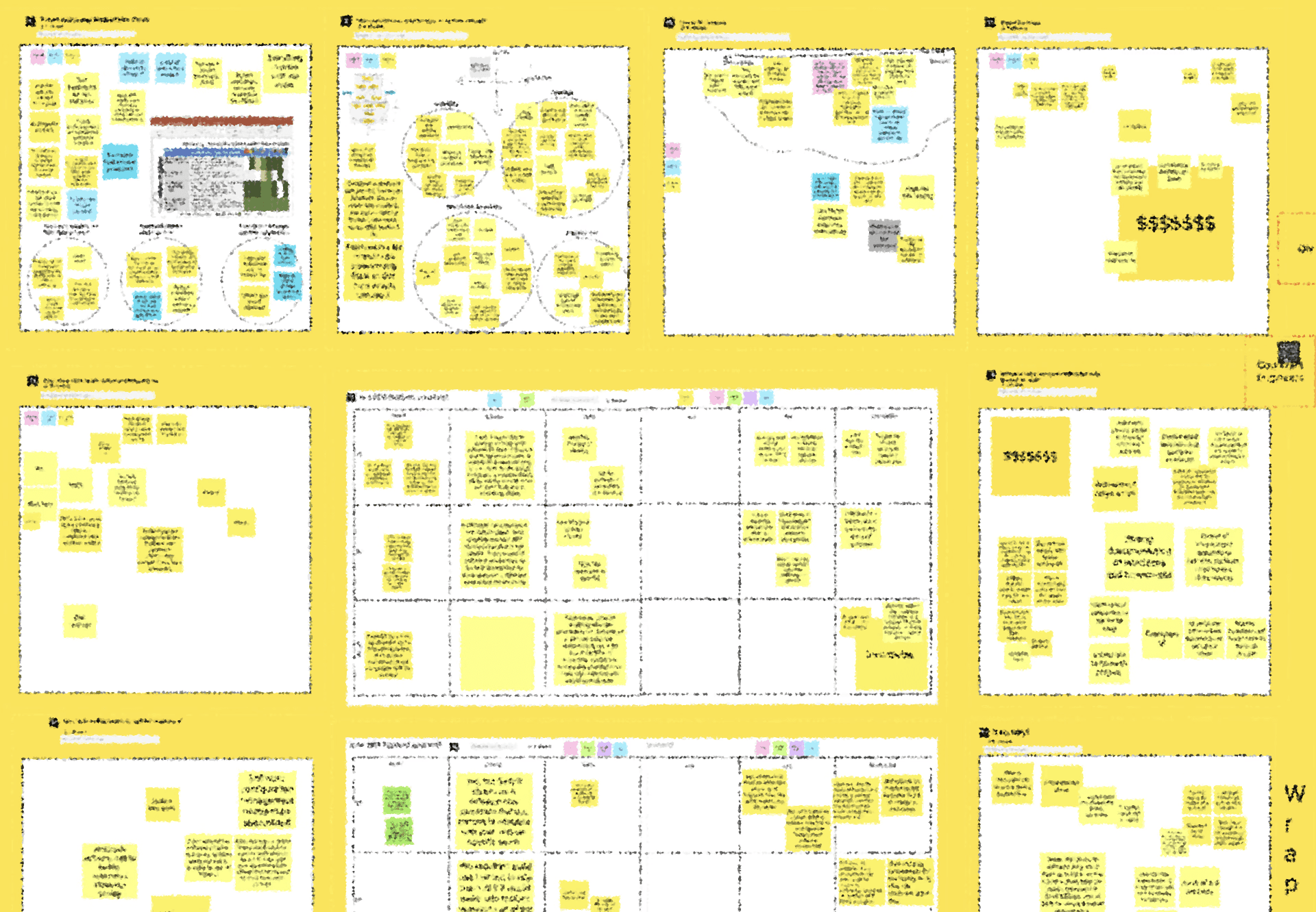
Pattern-find individually recorded results and organize themes in Mural
Synthesize results into research paper
Highlights
Plug & Play interface: A standardized UI that promotes familiarity and ease of use.
Modularity: A modular architecture that allows sub-components to freely make changes without concern for impacting the overall infrastructure.
Remote Accessibility: An approachable framework that enables the implementation of testing infrastructure and serves a large number of users simultaneously.
47 total stakeholders
60% response rate
4-45 years of autonomy experience
Conclusion
Thoughtful design is key in order to maximize accessibility across various use cases.
The testbed must be modular in its design, where software modules and components can be swapped in and out through standardized interfaces to enable sustained use of the testbeds by multiple users. It is recommended that further research focuses on the following core areas:
Gallery